

Table of Contents
- Schools Focus on Admission — But Not Always on Character
- Pressure on Students Is Increasing in Schools and Colleges
- When Teachers’ Frustration Reaches the Wrong Students
- Public Humiliation Can Destroy Confidence
- PTMs Often Ignore the Real Problems
- The Pressure of Financial Comparison
- Students Need Understanding — Not Just Pressure
- Final Thoughts
Pressure on Students: The Silent Struggles of Today’s Youth
Pressure on students is becoming one of the biggest hidden problems in schools and colleges today. Behind grades, uniforms, and classrooms, many students silently struggle with stress, comparison, favoritism, distractions, and emotional pressure that slowly affects their confidence and future.
But many parents do not realize that a child’s biggest emotional and mental battles often begin after they leave home and enter school or college.
Behind uniforms, classrooms, assignments, and exam results, thousands of students silently deal with pressure, comparison, unfair treatment, emotional stress, and environments that slowly affect their confidence.
And unfortunately, many of these struggles are ignored.
Schools Focus on Admission — But Not Always on Character
* grades,
* fees,
* performance,
* or academic records.
Very little attention is given to behavior, attitude, discipline, or the influence students may have on others.
As a result, classrooms often contain students with completely different mindsets. Some genuinely come to study and improve their future, while others disturb classes, disrespect teachers, distract classmates, or normalize unhealthy habits.
The biggest problem is that many institutions avoid taking strict action even when issues become obvious.
And in the middle of all this, sincere students suffer silently.
Good Students Are Under Pressure From Every Direction
They deal with:
* parental expectations,
* competition,
* exams,
* fear of failure,
* and anxiety about their future.
At the same time, they sit in classrooms where:
* lessons are constantly disturbed,
* discipline is weak,
* favoritism sometimes exists,
* and teachers themselves become mentally exhausted.
Imagine trying to focus on your dreams while the environment around you keeps destroying your concentration.
Over time, even intelligent and hardworking students begin losing motivation.
Not because they are lazy —
but because they feel mentally tired and unsupported.
When Teachers’ Frustration Reaches the Wrong Students
Some students behave badly every day:
* they do not listen,
* they answer rudely,
* they ignore instructions,
* and sometimes they completely stop caring about studies.
Naturally, this behavior frustrates teachers.
But the problem begins when that frustration unintentionally falls on respectful students instead.
A sincere student may simply:
* ask a question,
* make a small mistake,
* or try to explain themselves,
yet receive a harsh reaction because the teacher is already emotionally drained from handling difficult students.
Meanwhile, the badly behaved student often remains unaffected because they are already used to conflict and disrespect.
The respectful student, however, feels deeply hurt.
And slowly, a dangerous thought enters their mind:
“Maybe being rude is easier. At least those students are not constantly embarrassed.”
This is how good students slowly lose confidence.
Public Humiliation Can Destroy Confidence
Every child has self-respect.
When a student is insulted, shouted at, or humiliated in front of classmates, the emotional damage can remain in their mind for years.
Sometimes the student stops:
* asking questions,
* participating in class,
* expressing opinions,
* or even attending confidently.
Teachers and parents should understand that correction is most effective when done privately and respectfully.
Advice given calmly and personally helps students improve.
But humiliation in front of others often creates:
* fear,
* anger,
* emotional distance,
* insecurity,
* and silent resentment.
A child who feels respected is more likely to change positively.
A child who feels insulted may either become emotionally broken or emotionally rebellious.
PTMs Often Ignore the Real Problems
The conversation usually becomes:
“Your child needs to study more.”
“They are not serious enough.”
“They need better focus.”
Parents already know their child is struggling academically.
But very few people ask:
* Why is the student struggling?
* Is the classroom environment healthy?
* Are disturbances affecting concentration?
* Is favoritism discouraging them?
* Are they mentally comfortable in class?
The student quietly sits there while adults discuss marks and performance, but nobody truly listens to the emotional side of the problem.
As a result, the child feels trapped between school pressure and parental expectations.
The Pressure of Financial Comparison
In schools and colleges, students come from completely different financial backgrounds.
Some students arrive in luxury vehicles, wear expensive brands, and use the latest phones.
There is nothing wrong with that.
But on the other side, some students cannot even afford a bike. Their parents may already be sacrificing everything just to provide education.
Teenage years are emotionally sensitive. At this age, students naturally become attracted to status, appearance, and social image.
When they constantly compare themselves to wealthier classmates, many begin feeling insecure or “less important.”
Slowly, this affects their mindset.
Some students:
* start blaming their parents,
* develop frustration,
* make unrealistic demands,
* lose focus on studies,
* or feel ashamed of their financial situation.
Parents should openly discuss these realities with their children.
Children need to understand:
* success takes time,
* everyone’s journey is different,
* and temporary financial struggles do not define their future.
Many successful people once walked to school while others arrived in expensive cars.
Life changes with patience, consistency, and hard work.
Students Need Understanding — Not Just Pressure
Sometimes students genuinely want to succeed.
They want:
* peace,
* guidance,
* fairness,
* support,
* and a healthy environment.
But continuous pressure without emotional understanding slowly weakens them mentally.
Education should not only produce grades.
It should produce emotionally strong, confident, respectful, and balanced human beings.
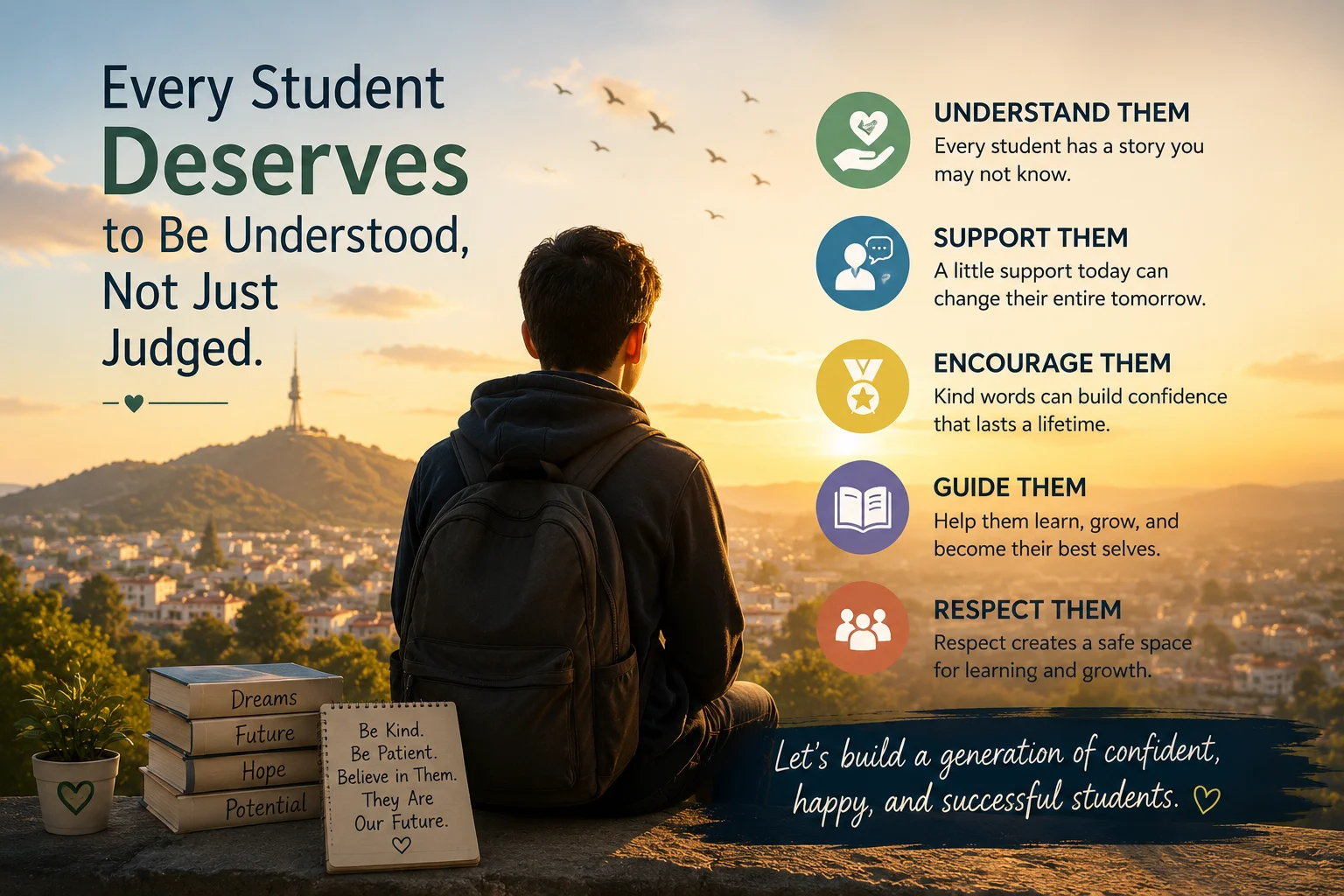
At Mirpur Guide, we believe students deserve more than just academic pressure — they deserve understanding, guidance, motivation, and a positive environment where they can grow with confidence. Our goal is to raise awareness about real-life issues affecting students, families, and society while sharing meaningful discussions that inspire positive change.
Final Thoughts
Some are struggling with:
* classroom distractions,
* emotional pressure,
* comparison,
* favoritism,
* fear of humiliation,
* financial insecurity,
or the silent burden of expectations.
A good student does not always need more pressure.
Sometimes they simply need:
* understanding,
* respectful communication,
* fair treatment,
* and an environment where they can grow peacefully.
Because in the end, students are not machines created only for marks and competition.
They are human beings trying to build their future while protecting their confidence at the same time.